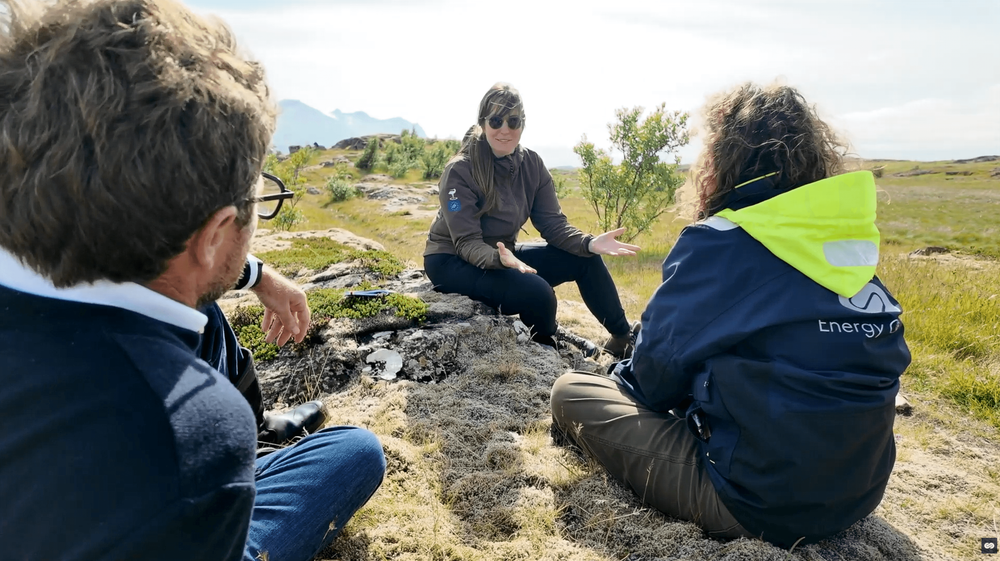
Peatland LIFEline had the pleasure to welcome Victorien Erussard and Juliette de la Salle from the Energy Observer hydrogen and renewable energy-run boat during their stop-over in Iceland earlier this July.
The filming crew visited the Miðfossar site where the peatland restoration process was explained as well as the challenges related to carbon emissions and their reduction through peatland restoration in Iceland.
The goal is to remove 143.000 t. CO2e / year
Wetlands are one of the most powerful greenhouse gas sinks but also currently some of the most degraded ecosystems and important GHG emiters. It is estimated that drained peatlands emit 23 tonn. CO2e / ha in Iceland, which represent an important part of the country‘s CO2 emissions per year. By restoring them, it is possible to reduce their emissions down to 3,4 tonn. CO2e / ha.
The goal of Peatland LIFEline is to remove 143.000 t. CO2e / year after restoration for all of the sites involved. The project therefore fully participates, among other wetland restoration projects, to Iceland‘s climate neutrality objectives for 2040, as well as the European Green Deal‘s main objective to cut greenhouse gas emissions by 55% by 2030. Iceland is host to many greenhouse gas emission removal initiatives, both nature-based and technological, that work together to achieve those goals.
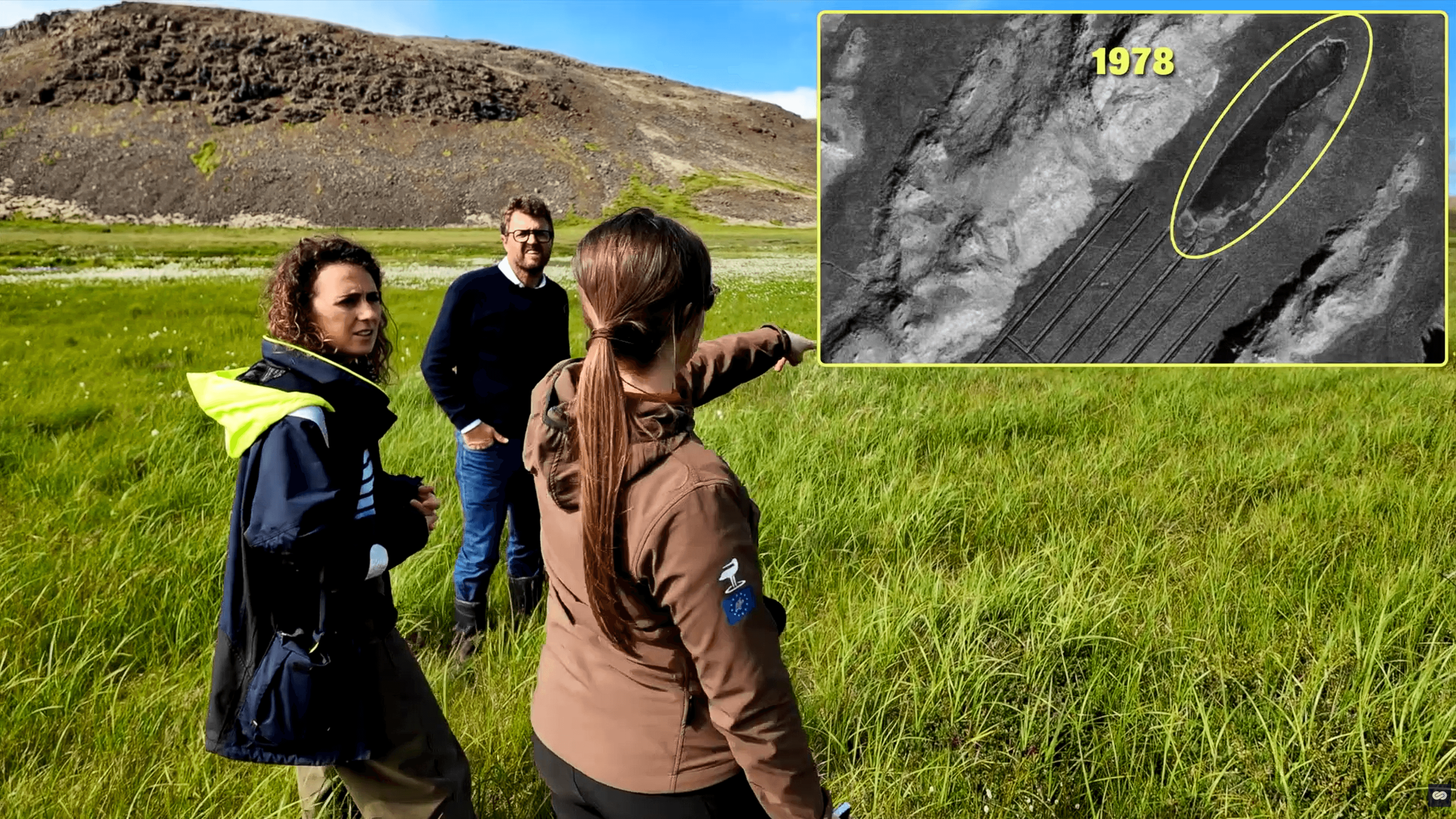
The filming crew additionally met with the forestry division of Land and Forest Iceland (LFI), an institution who is an important partner of Peatland LIFELine. LFI is managing the physical implementation of the nature-based carbon emission removal and sequestration projects in Iceland through wetland restoration, tree planting, and land reclamation. It is most notably in charge of the actual restoration of the Peatland LIFEline restoration sites, as well as the gas fluxes monitoring before and after the restoration.
The Energy Observer crew also met with Climeworks and Carbfix from the innovation sector, which are experimenting directly capturing CO2 from the air and turning it into stone by injecting it in the basaltic soil.
The interview was included in their „Carbon Hunters“ series and can be viewed here with English subtitles. Another video on renewable energies and decarbonization in Iceland can be found in their „DecarboNations“ series.