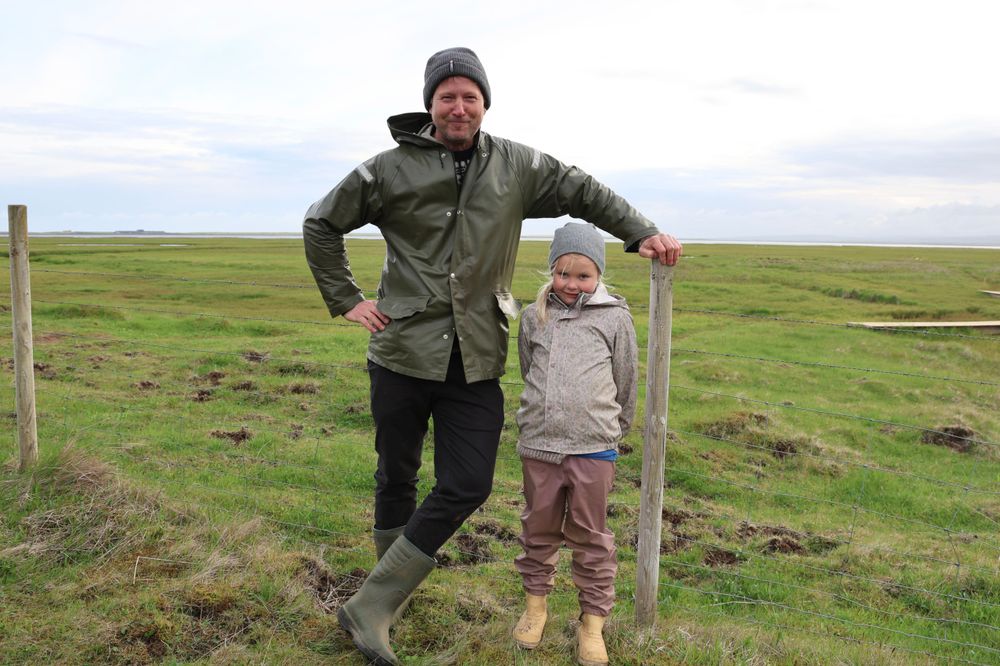
Two of the three winners of the Peatland LIFEline logo and motto competition, Christian Schultze and Marey Ólafía Kristinsdóttir, went birdwatching in the Flói Nature Reserve with BirdLife Iceland last Tuesday.
Nearly 20 people of all ages attended the birdwatching event. The guide on this occasion was Gunnlaugur Þráinsson, a business graduate, birdwatcher and member of BirdLife Iceland.
Young and old alike saw 17 species in the Reserve itself: whooper swan, mallard, tufted duck, common eider, greater scaup, whimbrel, common snipe, red-necked phalarope, redshank, dunlin, black-headed gull, great black-backed gull, lesser black-backed gull, arctic tern, red-throated diver, raven and meadow pipit. A black-tailed godwit and an oystercatcher were also spotted right by the road on the way to the Reserve.
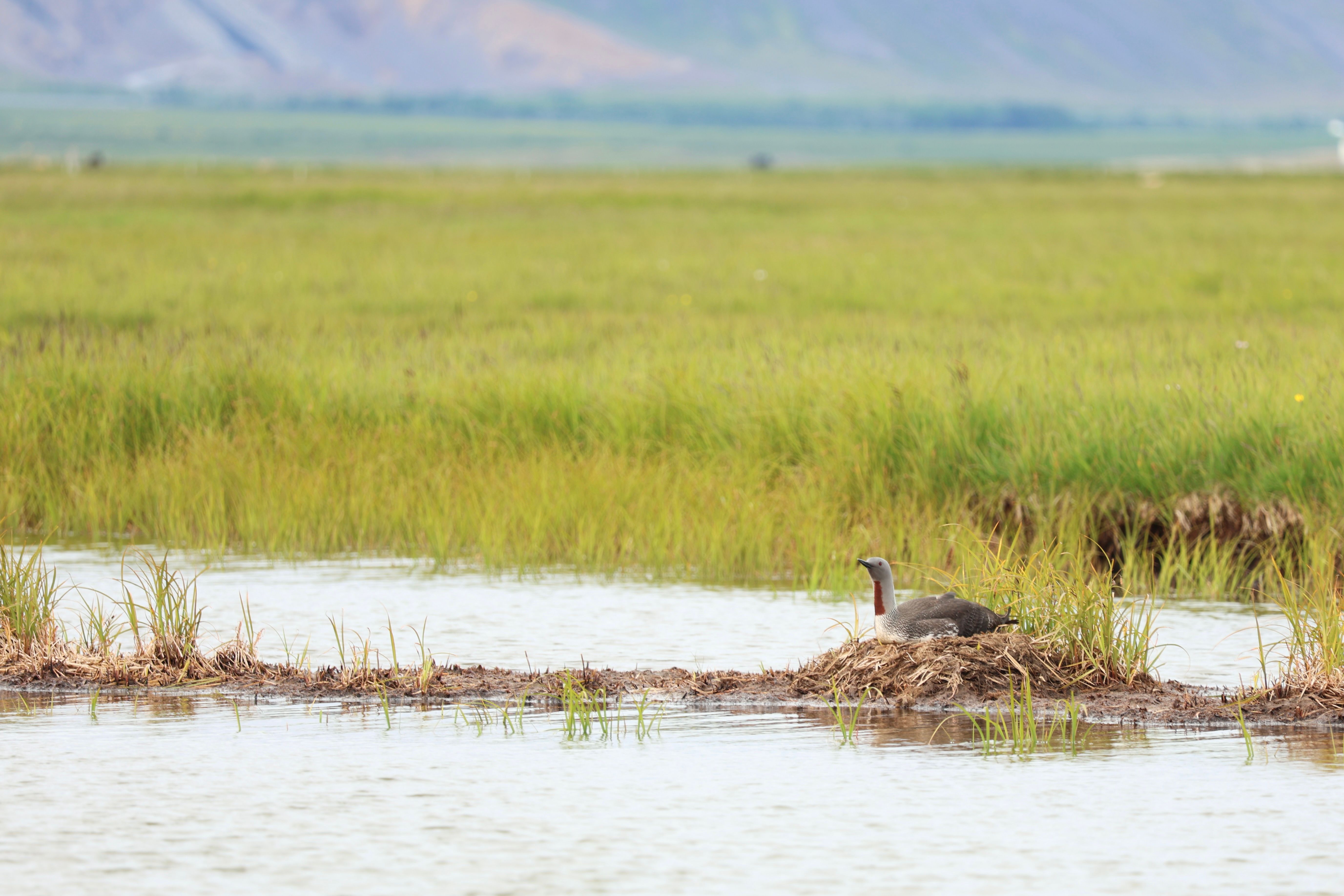
The red-throated diver understandably attracted attention as it was abundant on the area's ponds, and it is indeed the signature bird of the area.
Ponds everywhere
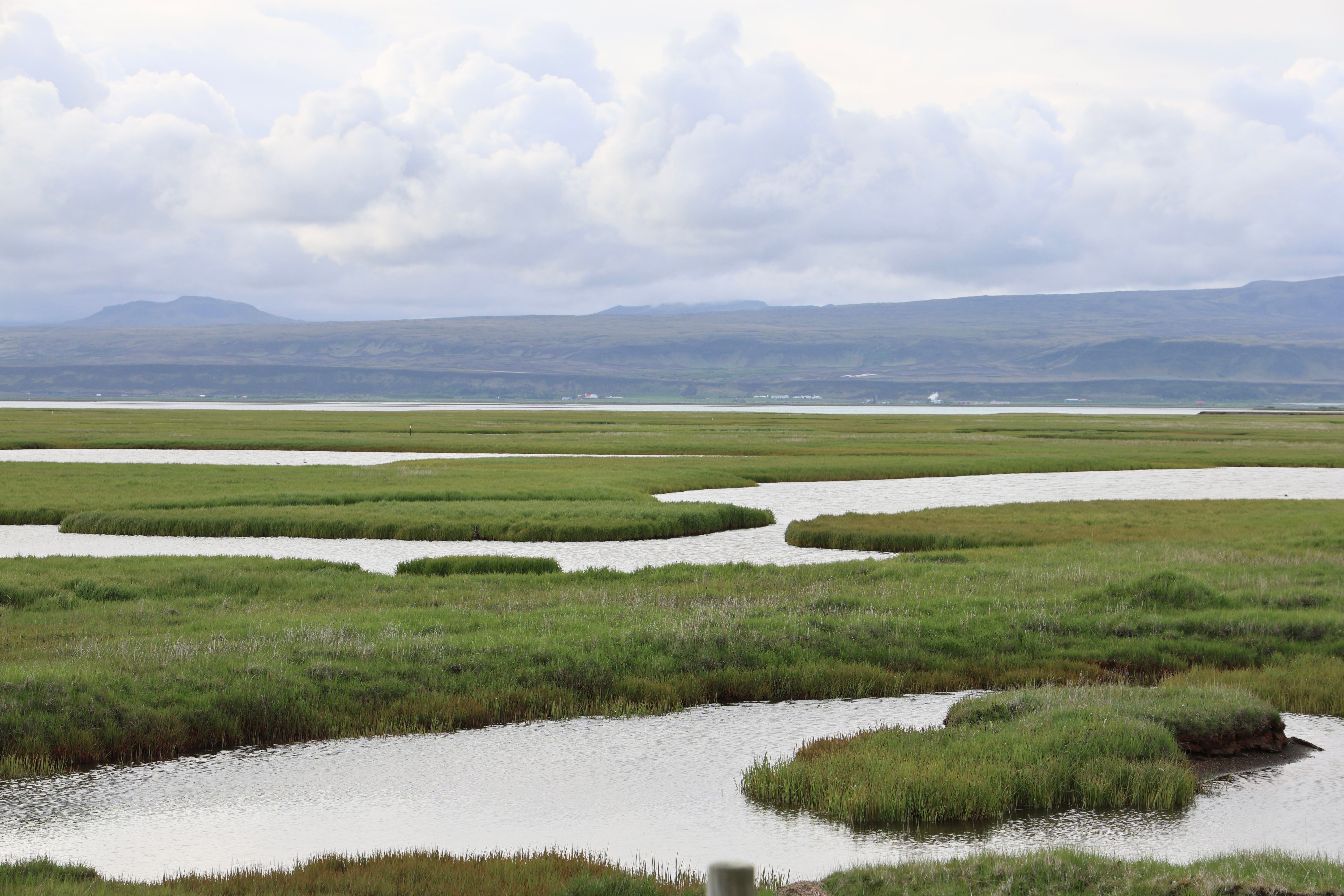
The size of the nature reserve is about 5 km2; it is about 1–1.5 km wide and, together with Ölfusforir, is part of the Ölfusá estuary, which is an internationally important bird area. The land is low-lying, with an average elevation of only about 2 m above sea level.
During floods in the Ölfusá river, the entire area is submerged, with only the hills of Stakkholt, where the bird hide is located, remaining above water. During spring tides, the tidal effects are felt in the Reserve. The Flói area lies on the great Þjórsá lava field, which flowed about 8,700 years ago. It was formed in an eruption in the Veiðivötn area and is the largest lava flow on Earth since the Ice Age.
The surface of the Reserve is covered with small pits and ponds. Depressions in the ancient lava field are filled with water due to the high water table, which explains the formation of the ponds. In the Flói area, these ponds or pools are called Dælir. They are scattered throughout the lava field and number in the thousands. The Dælir range from about 4 m in diameter to several tens of metres and are mostly shallow.
Wetland birds characterise the area
About 70 bird species have been observed in the Reserve, with nearly 25 species nesting there regularly. Wetland birds characterise the area, and there are direct links to nearby bird-rich areas such as the shore, the Ölfusá estuary and Ölfusforir. The birdlife is particularly rich and diverse during the breeding season.
Of the waterfowl, whooper swan, greylag goose, mallard, wigeon, teal, gadwall, tufted duck and greater scaup breed there. The common shelduck is likely an annual breeder, and garganeys and northern shovelers have been seen during the breeding season, but these ducks are all rare in Iceland. The red-throated diver nests widely by the ponds, with tens of pairs, and is considered the signature bird of the Reserve. The red-throated diver population increased significantly with the restoration of wetlands in the Reserve.
There is a considerable eider duck colony in the Kaldaðarneseyjar islands in Ölfus, off Flóagaflsengjar, and a few females nest in the Reserve itself. The black-headed gull is an irregular breeder. A few pairs of arctic skua, lesser black-backed gull and great black-backed gull nest there. Arctic terns come there to feed. The short-eared owl is likely an annual breeding bird, although a nest is not found every year. The owls can often be seen flying around at dusk in search of food, especially while they are feeding their young.
Waders make a big impression on the wetland. The species that nest in the marshes are the dunlin, whimbrel, black-tailed godwit, common snipe, red-necked phalarope and meadow pipit. The density of dunlin and red-necked phalarope is unusually high. Golden plover and oystercatcher nest in dry areas. During migration, in spring and autumn, greylag geese and pink-footed geese are most prominent, as are ducks like the wigeon and tufted duck, various waders such as the common snipe, and also the northern wheatear. In winter, birds are most prominent at the Ölfusá estuary, mainly gulls, but sometimes long-tailed ducks and eiders are seen. When there is open water in the Reserve, whooper swans, teals, mallards and goldeneyes can be seen.
Diverse vegetation
Over 70 species of vascular plants have been found in the Reserve. A diverse range of wetland vegetation grows in the marshes. The water meadows are covered with well-developed common sedge, while in the drier areas, woolly willow, tea-leaved willow, bog sedge and common cottongrass are dominant, along with various grass species. The common sedge was mown right up until around 1970, and many farms in the Eyrarbakki district had mowing rights in the meadows.
Most ponds are fringed with slender sedge, and here you can find yellow water-lilies, floating sweet-grass, marsh cinquefoil and other pond plants. In the beautiful heathland hollows near the Flóagaflsbæir farms, you can find thrift, common butterwort and whitlowgrass. In the southern part of the Reserve, near Óseyrarnes, dryland and semi-wetland plants are more prominent. Garden angelica is conspicuous there, but you can also find plants such as marsh arrow-grass, wild pea, harebell and red fescue.
Two beautiful but rare flowering plants are common in the Reserve. One of them, meadow-rue, grows here and there throughout the Reserve and also in the marshland. It is otherwise only common in Mýrdalur and under the Eyjafjöll mountains, where it mainly grows on south-facing grassy slopes. The other is chickweed-wintergreen, which is widespread here. This is the third location where it has been found outside of East Iceland, where it grows widely in woodlands. Lesser tussock-sedge and creeping sedge are rather uncommon sedges that grow among the common sedge.
Photos: Bára Huld Beck