Questions and answers
Wetlands are areas where water is the dominant feature of the environment, either all year round or for part of the year. Examples include mires, fens, freshwater ponds and mudflats. In wetlands, the water table is high and the soil is often saturated with water, which creates very specific conditions for flora and fauna.
Wetlands play an extremely important role in the ecosystem. They are nature's sponges, regulating water, reducing the risk of flooding and purifying water before it flows into the sea. In addition, pristine wetlands are hugely important carbon sinks. In them, dead plant remains decompose slowly in the water-saturated soil and form peat, which sequesters large amounts of greenhouse gases over the long term.
Wetland drainage involves digging deep ditches to channel water away from an area and dry out the soil. In Iceland, this was done on a very large scale in the 20th century, mainly with the aim of creating arable land for agriculture and improving grazing land. Ditching lowers the water table and the mire dries up.
The consequences of drainage are enormous for the ecosystem and the climate. When the water disappears, oxygen reaches the peat. Then, plant remains that have accumulated and been preserved for thousands of years begin to decompose rapidly. This releases large amounts of greenhouse gases, particularly carbon dioxide (CO2), into the atmosphere. Drainage also destroys the delicate habitats of numerous birds and plants.
Wetland restoration is the process of returning drained and dried land to its natural, wet state. This is most often done by filling in old drainage ditches or by building soil dams in them. The goal is simple: to raise the water table back to the surface so that the land becomes an active mire again.
The benefits of restoration are crucial in the fight against climate change. When the water level rises and seals the soil again, the decomposition of peat stops, and with it, a large part of the greenhouse gas emissions caused by the drainage ceases. In addition, nature regains its original function; biodiversity increases as mire vegetation recovers and birds that relied on the wetland return.
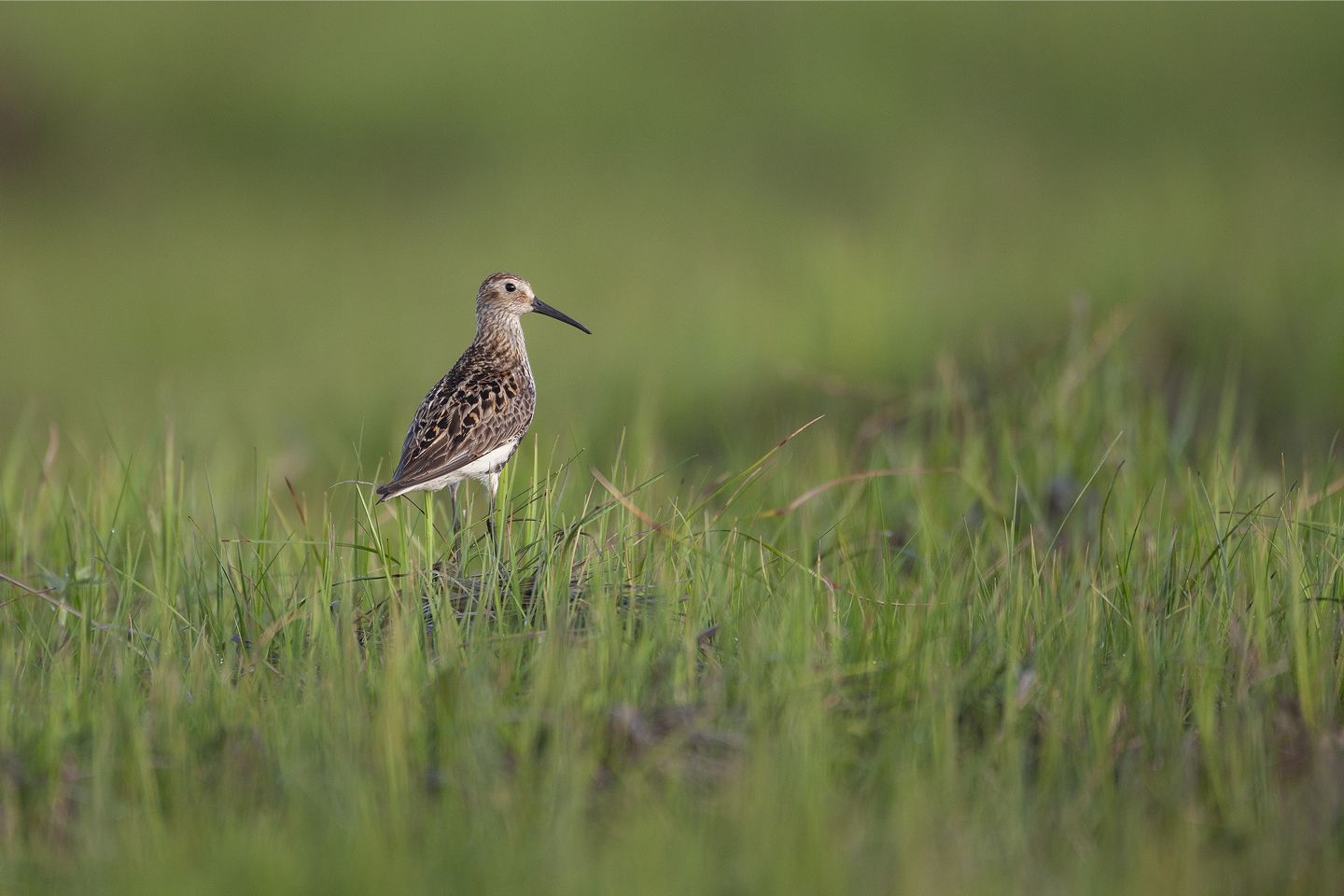
Icelandic wetlands teem with life in the spring and summer and are among the most important breeding grounds for many bird species in Europe. Wading birds thrive there in particular, finding plenty of food – insects, worms and snails – in the damp, soft soil or in shallow pools. For these birds, the marsh is an absolute necessity for raising their young.
Among the most characteristic birds of Icelandic marshes are the common snipe with its well-known drumming sound, the black-tailed godwit, the whimbrel, the redshank and the golden plover. Many species of duck, such as the mallard and the teal, also use the wetter parts of the wetlands for nesting and foraging. The horned grebe and the red-necked phalarope are also examples of birds that are completely dependent on wet marshlands and ponds.
The European eel has a remarkable life cycle that connects Iceland to distant oceans. It hatches in the Sargasso Sea, far south of the Bermuda Islands, and from there it is carried by ocean currents all the way to Europe and Iceland, becoming a 'glass eel' off the Icelandic coast. It seeks out freshwater, often in ponds, rivers and nutrient-rich wetlands, where it becomes a yellowish 'yellow eel'.
The eel then stays in Iceland, often for many years, feeding and growing in Icelandic marshes and rivers. When it reaches adult size, it transforms into a 'silver eel', stops feeding and embarks on a swim of thousands of kilometres back to the Sargasso Sea to spawn. The European eel is now critically endangered worldwide, making Icelandic wetlands a very important and sensitive nursery area for this species.
The Icelandic black sedge-brown moss fens are a specific type of wetland habitat where various sedge species are completely dominant in the vegetation. These are usually very wet fens where the water table is high, and the land can be submerged for a large part of the year. This vegetation is often characteristic of the banks of ponds or shallow depressions where water collects.
This habitat type is characterised by very dense, lush vegetation that is perfectly adapted to waterlogged and oxygen-poor soil. Although the diversity of plant species is often low, sedge fens play an important ecological role. The root systems of the sedges bind a large amount of carbon in the soil, and the environment creates excellent living conditions for a variety of invertebrates, which in turn attract foraging birds.